
How does America’s largest county in land area ensure that its employers consistently find a highly skilled and well-trained workforce? In San Bernardino County, that need is met by a multi-pronged approach to worker training that begins in school.
From K-12 to higher education, curriculum throughout this 20,105-square-mile county of 2.24 million people is designed to equip students with the skills they need to fill the most in-demand jobs in a wide variety of industries, including occupations requiring skillsets developed in advanced education classrooms and labs.
Loma Linda University (LLU) and California State University San Bernardino (CSUSB) are institutions that have forged reputations over decades as two of the best workforce development institutions in the country. Look around San Bernardino County today and you will find that many of the most technical jobs in the county — which has a labor force of 1,054,660 people — are filled with graduates of these two institutions.
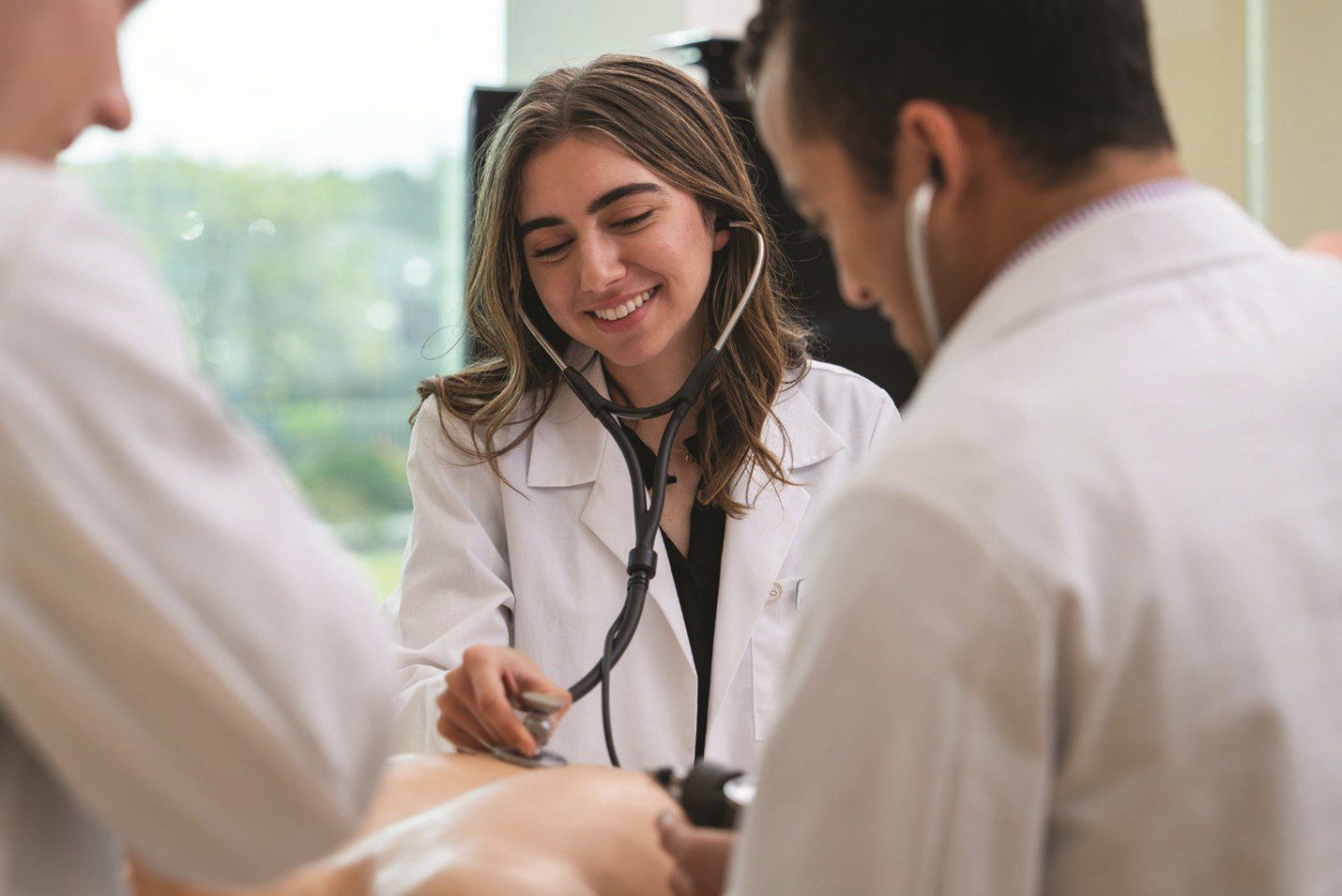
No one knows this better than Dr. Richard H. Hart, president and CEO of Loma Linda University Health, an academic medical center that operates six hospitals and a network of clinics in the Western U.S. LLU is comprised of eight schools that make up the healthcare-focused university that has served the Inland Empire of Southern California since 1905.
How important is LLUH? Its 18,000 employees treat more than 1.5 million outpatients each year. Medical breakthroughs that we take for granted today — like heart transplants and FLASH proton therapy — were pioneered at this teaching hospital. In 1984, Dr. Leonard Lee Bailey successfully performed the first heart transplant on an infant, baby Fae, who survived for 43 days with the heart of a baboon. A year later, Bailey performed the first successful human-to-human heart transplant on Eddie Anguiano, a dying newborn known as baby Moses, who was saved by this medical miracle.
Anguiano just celebrated his 40th birthday, and Loma Linda hasn’t slowed down one bit — neither has Hart. A former university medical student himself who enrolled in 1967, Hart shows up for work every day at 5:30 a.m., sees patients, and works with students while he juggles the many responsibilities of being LLUH’s chief executive.
“I was born here in the old hospital, and I served as chancellor and president of the university for 28 years,” he says. “We educate over 4,200 students each year, graduate 1,500 of them and employ 1,200 full-time physicians. We emphasize service. Being a Seventh-day Adventist institution, we build service into our curriculum and all of our clinical activities. We may be 120 years old, but our concept of service as a foundational principle has never wavered.”
Leader in Medical Innovation
The institution has a $553.4 million endowment and a 93.7 percent graduation rate. Its nursing program is ranked in the top 100 in the country.
With more than 1,000 beds, LLUH has the only Level 1 trauma center in San Bernardino County and is one of two in Riverside County. It is also home to the only children’s hospital in the region. “We’ve received a lot of recognition for the quality of our patient care,” says Hart. “Ten years ago, we started a college to train them as community health care workers. Every Monday, we send our fourth-year medical students to follow these kids around the community to visit patients where they live.”
LLUH trains medical students in the heart of a region that is home to 30 million people.
“We are the go-to place in the Inland Empire,” Hart says. “Our focus on cancer research led to the development of the first proton beam to treat cancer patients. Loma Linda University Cancer Center introduced CAR-T therapy, becoming the first and only institute in the Inland Empire to offer this cutting-edge cancer treatment for both children and adults. This significant development brings new hope to cancer patients in the region, providing a revolutionary approach to fighting blood cancers using genetically modified cells from the patient’s own body.”
“We performed the first successful partial heart transplant,” Hart said. “With over 1,200 specialists, we are the region’s primary experts in health care. We employ more international workers than any other medical school in the U.S., and we’re not done. We’re building a children’s health specialty clinic of 105,000 square feet and an 80-bed rehabilitation hospital. We’re also expanding into first-year college programs. You can come right out of high school and go straight into studying medical science.”
The breakthroughs don’t end with Loma Linda. Just 12 miles to the north up I-215 is CSUSB, a school of 18,000 students situated on a 441-acre campus. The school’s official colors may be black and blue, but this institution goes on offense much more than it plays defense, as exemplified by its motto: “We Define the Future.”
Although he is a scholar in Civil War and Reconstruction history, Dr. Ryan Keating is one of many CSUSB faculty members leading the school and its students into the future. Ensuring that the school motto is more than lip service, Keating is spearheading the school’s first national conference on accelerated workforce development in emerging technologies this April.
“The Defining the Future “Conference” is designed to introduce students to the wide array of jobs in a variety of fields where they can leverage their interests and their experiences to move from campus to careers,” he said. “It’s increasingly clear that new and emerging technologies are here to stay and tech jobs will make up more than 90 percent of the employment sector in the next 10 years.”
Bringing Industry to the Students
As executive director of CSUSB’s Office of Student Research and executive director of the Applied Innovation and Economic Development Center (AIEDC), Keating works closely with colleague Dr. Timothy Akers, chief research officer and head of the Office of Academic Research. A nationally recognized scholar in public health, criminology and quantum literacy, Akers is co-organizing the April conference with Keating.
“We spend a great deal of time educating our students, teaching them to be critical thinkers, critical readers, critical writers and strong academicians,” Keating said, “But we need to bridge that with forward thinking about what jobs will look like five, 10 and 20 years from now so that students are not only prepared to make an impact now, but also to be on the cutting edge as industries change.”
The three-day event in mid-April will feature industry presentations, hands-on workshops, exhibits and a recruitment fair connecting students with leading companies in artificial intelligence, quantum computing, semiconductor manufacturing and other emerging technology fields. “All students can attend for free,” Keating said. “They’ll hear from industry experts, see the kinds of products companies are developing and talk directly with recruiters.”
Participating students, likewise, will present their research papers at a Meeting of the Minds showcase. “It’s going to be a space of convergence where ideas meet opportunity, where networks are created and where pipelines are developed,” he said.
In an interview with Site Selection, Keating stresses the importance of convening industry and students in one place. “This conversation is paramount to bringing industry and academia together,” he says. “This is about creating opportunities for collaborative R&D. When I came here six years ago, we emphasized research as a tool to develop skills.”
He says it’s challenging because 80 percent of CSUSB students are first-generation enrollees. “Their primary motive is to get a job,” he says.
“We want to help them develop skills across multiple disciplines. Students on campus don’t have the network to leverage their skills in the workforce. The heavy logistics emphasis in the Inland Empire means that many students see that as their logical career pathway, but they’re not aware of other career paths. It’s all about building partnerships with industry, being proactive in workforce development and having conversations with industry about their needs.”
These growing collaborations are already paying big dividends for CSUSB students, Keating says.
“One of our anthropology students presented her work at Meeting of the Minds and was awarded a Fulbright Scholarship at Dundee University in Scotland. We have produced a Goldwater Scholar and had a number of pre-doctorate California Scholars. To be competitive for these large international programs, a key metric is student engagement in research at the undergrad level. That’s what we emphasize here.”
This Is How Businesses Win
The students aren’t the only winners. “We’re seeing big wins for local employers,” Keating says. “We have students moving into major Fortune 500 companies. We’re working with alumni who have gone on to work at Amazon Prime Video. Our alumni are playing dramatic roles at companies across the region and nation. Our showcase in April will highlight these successes.”
Keating says he wants CEOs in California, Arizona and Nevada to know that “CSUSB is open for business. We want to work with industry to help them meet their needs. Our goals are shared ones where everyone wins when we collaborate. The private sector can and should be the guiding force in determining workforce needs, and that can guide the university in how we respond.”
He added that “as CSUSB looks forward, we hope to become a national model for workforce development that shows how to work collaboratively with industry partners to make a tremendous impact on worker training.”
Along those lines, CSUSB is planning to build a 300,000-square-foot innovation campus “that will be a conduit through which industry and academic can convene,” says Keating.
“Long term, our goal is to be an agent of change in San Bernardino County. We will be on the edge of the quantum era and ensure that our students are prepared for the jobs of the future.”
A key partner in that effort is Entrokey Labs of McLean, Va. Entrokey builds and deploys quantum computing software to defend against cyber-attacks. Zenia Tata, senior vice president of strategic ventures at Entrokey works with both Keating and Akers to expand quantum literacy among students.
For Akers, that challenge is personal. He is the founder and CEO of the National Quantum Literacy Network, and Tata says their work is indispensable. “CSUSB is doing a lot of good work in quantum literacy,” she says.
“CSUSB has put together a quantum literacy program. This is important for America’s future. The work CSUSB is doing in this area is so unique.”
By sponsoring the “Defining the Future Conference,” Entrokey will engage students in one-on-one conversations around quantum tech. “We talk with students about where they fit in,” Tata said.
“We talk with them about where they can go to get further training. They’re concerned about job obsolescence. We realize that we’re going to need these educated workers in the future. That’s why we’re working with multiple universities right now.”
Tata says San Bernardino County is where this training needs to occur first because “every Fortune 50 company has a presence in the county. They have their warehouses and other facilities here, but they typically do not employ their brainpower here. We aim to change that. We want to teach blue-collar workers that there are jobs for them in this field. Yes, quantum technology needs Ph.D.s, but it also needs every type of worker to repair this technology, cool the machines that run this technology, and maintain and repair the systems that keep them operating.”
She added, “This work is vital, because quantum computing is the next technology that is going to completely transform our world.”
Additional County Update News – March 19, 2026
- State awards $10 million in housing funds to expand support in San Bernardino County
- Governor signs bill to protect veterans from predatory claim agents
- Santa Ana River Trail Phase III wins two major awards
- A new beginning at Oro Grande Park
- Future Behavioral Health Professionals Symposium engages local students in career exploration
- How two universities in San Bernardino County became technical talent factories
- Transitional Assistance programs promote stability and long-term self-sufficiency
- Women’s History Month: Breaking barriers in emergency management
- SBC Through Your Eyes: Umbrella Alley in Redlands
- Submit your photos and videos of the county’s destinations, nature and cityscapes
- San Bernardino County history: Apple Valley
- Things to do in San Bernardino County
- Pet of the Week: Benny