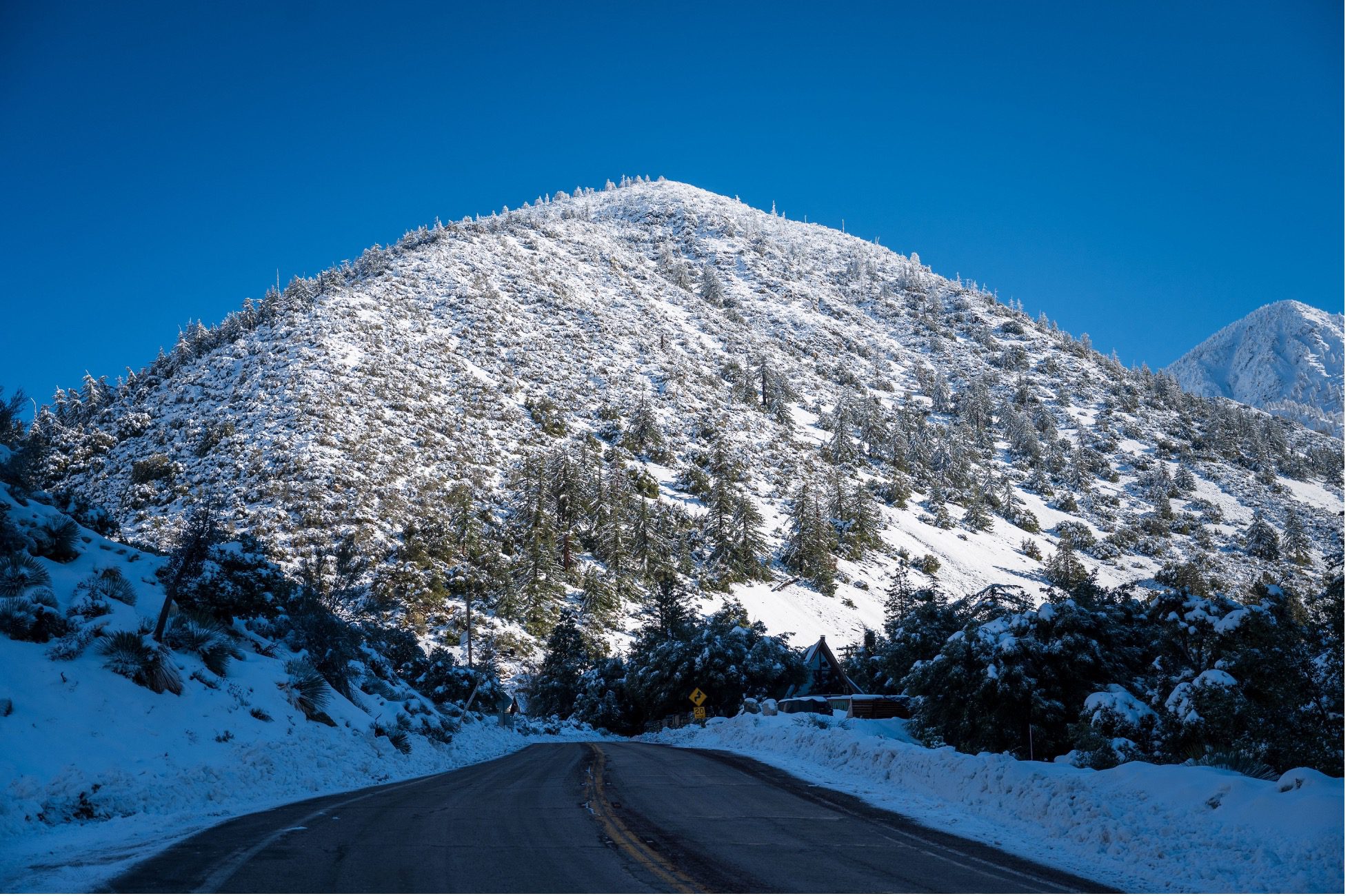

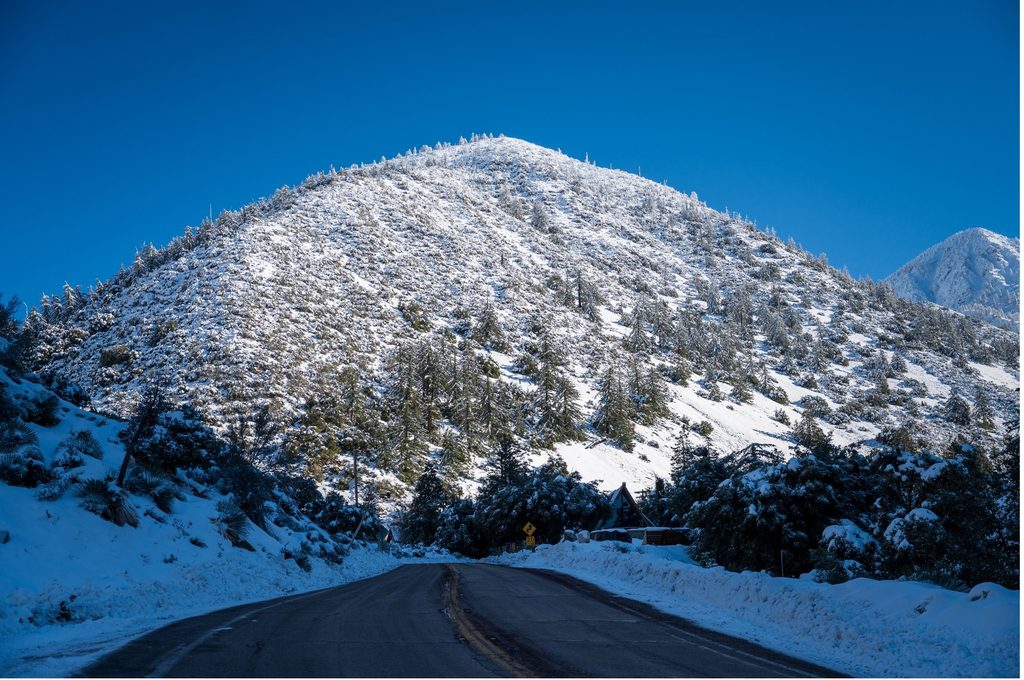
Mount San Antonio, also known as Mount Baldy, rises to 10,064 feet in the eastern San Gabriel Mountains. The summit sits along the boundary between Los Angeles and San Bernardino counties.
A local rancher named the mountain after Saint Anthony of Padua. Its more familiar name, “Baldy,” refers to the mountain’s distinctive bare and rocky south face, which is visible from Los Angeles. Although Mount Baldy is commonly used today, Mount San Antonio remains the mountain’s official name, according to the Geographic Names Information System (GNIS). The official name is also reflected in the name of nearby Mount San Antonio College, also known as Mount SAC.
Development in the San Antonio Canyon increased during the second half of the 19th century. In 1859, Victor Beaudry and Damien Marchessault built an icehouse in the canyon. Ice harvested from the mountains was transported by mule to Los Angeles where it was sold door to door. Some of the ice was also used at Beaudry and Marchessault’s ice cream saloon, which was reportedly the only establishment of its kind in the city at the time.
The mountain soon attracted explorers and visitors as well. In 1875, an Army surveying party made the first recorded ascent of Mount San Antonio. As interest in the area grew, recreational development followed. In 1906, Charles Baynham established a camp in the canyon known as Camp Baynham. A few years later, William B. Dewey built the Baldy Summit Inn approximately 80 feet below the summit.
Unfortunately, the growing popularity of the canyon brought conflict over its water resources. The San Antonio Water Company controlled the water rights in the area and tensions developed between the company and the camp owners. After a series of legal disputes, the San Antonio Water Company eventually purchased Baynham’s camp and hired Baynham to manage it. The property was renamed Camp Baldy.
In 1908, the area became part of the national forest system. It was also a popular mountain retreat for Los Angeles area residents. The resort community expanded until the devastating flood of 1938, which destroyed many of the structures in Camp Baldy and nearby Icehouse Canyon.
Camp Baldy was eventually rebuilt and developed into what is now Mount Baldy Village. Ski lifts were also constructed in 1952. Although the flood destroyed the casino, the hotel survived. It is now known as the Buckhorn Lodge and remains one of the area’s historic landmarks.
In 2014, the surrounding mountains became part of the San Gabriel Mountains National Monument, the eighth national monument to be managed by the U.S. Forest Service. Today, Mount Baldy is an unincorporated mountain community with its own fire department, church, visitor center and school district.
Additional County Update News – October 8, 2026
- Shift happens: Get ready for the Great ShakeOut on Oct. 15
- Explore San Bernardino County Services: How your mail ballot is processed and counted
- Longtime county leaders step into new roles
- Board Actions, Oct. 6
- Operation Smash and Grab leads to 15 arrests
- County Fire completes North San Bernardino Fuels Reduction Project
- Charge into fire safety: Simple steps can help prevent fires
- Protect yourself and the community from respiratory virus infections
- Public Health launches Epic and MyChart to enhance patient care
- County and partners celebrate completion of new roundabout in Big Bear
- One month, thousands reached: September’s Behavioral Health impact
- Help shape a new Behavioral Health resource app for teens
- SBC Through Your Eyes: Apple Valley Airshow
- Submit your photos and videos of the county’s destinations, nature and cityscapes
- Things to do in San Bernardino County
- Pet of the Week: Foo